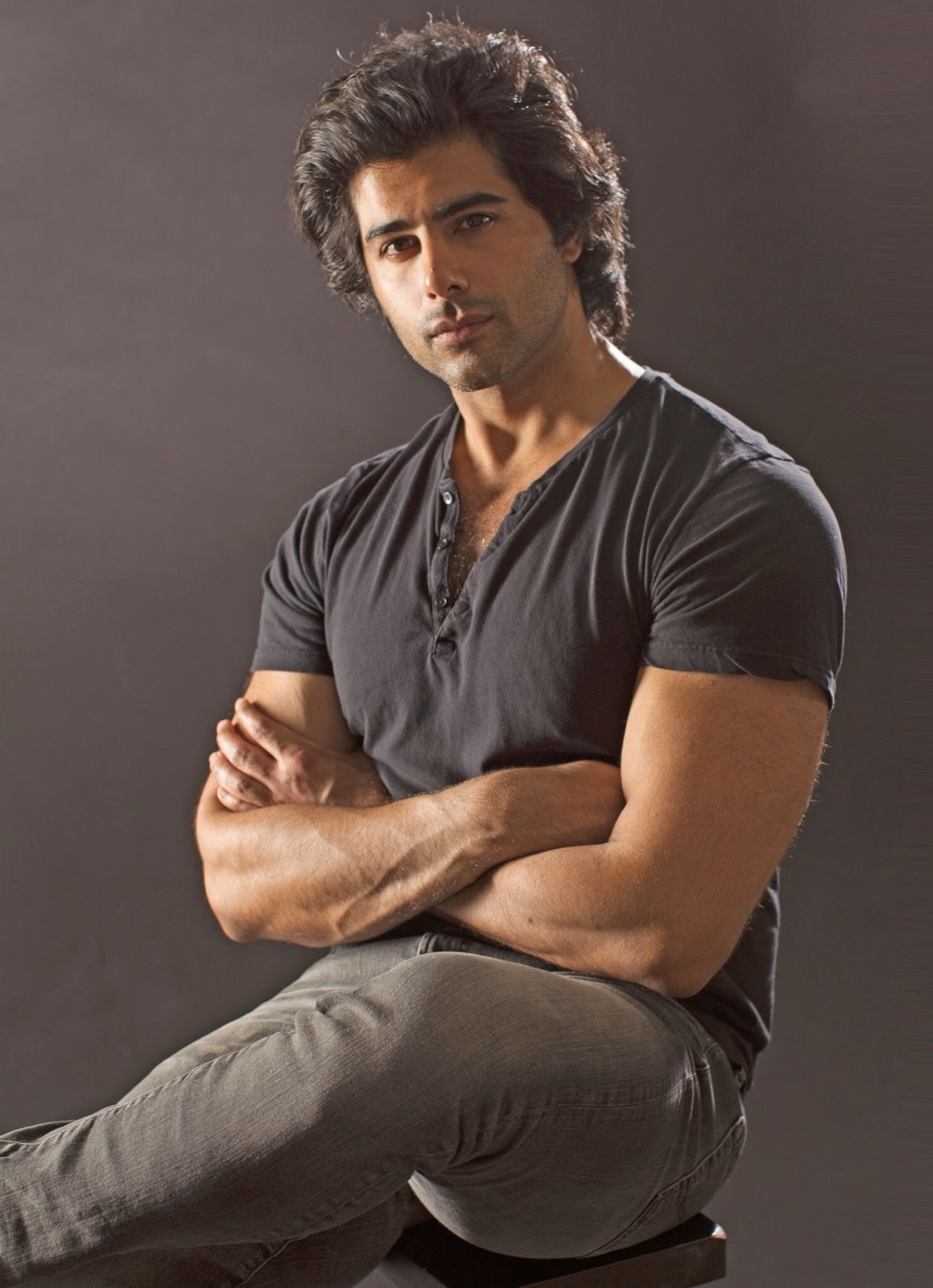
About the Founder
Rajiv Uttamchandani
Founder & Executive Director
R.A.V.E.N. Institute
Visiting Astronomer · California Institute of Technology
Astronomical research
I am the founder and Executive Director of R.A.V.E.N. Institute and a Visiting Astronomer at the California Institute of Technology. Born and raised in the Philippines, I work in time-domain astrophysics: discovering and characterising rare variable objects through large surveys such as TESS, ZTF and NEOWISE, using Gaia photometric and astrometric constraints, and following up with targeted photometric and time-resolved spectroscopic observations. My current focus is the direct, model-independent measurement of the masses of M dwarfs in eclipsing and spectroscopic binaries. These systems provide empirical benchmarks for models of low-mass stars and for the mass–luminosity and mass–radius relations. I am a co-author of VarWISE, a catalogue of infrared variability from NEOWISE single-exposure photometry (Paz et al. 2026), and lead author of two papers in preparation on eclipsing M-dwarf binaries.
R.A.V.E.N. Research Labs
I also founded R.A.V.E.N. Research Labs, where I develop digital tools that make astronomical research accessible to students, educators and members of the public. Its browser-based platform brings together public astronomical archives, live alerts, interactive teaching models and tools for analysing observations. Researchers can examine light curves and spectra, investigate variable objects, and compare observations with physical models without installing specialist software. My aim is to give students access to the data and methods used by professional astronomers, supporting their progress from learning a concept to investigating an open question and preparing a citable research contribution.
Teaching and mentorship
I have taught physics and astronomy at the university level since 2009, at California State University, Northridge, Santa Monica College, the New York Film Academy, Palomar College and Loyola Marymount University. At Loyola Marymount, I served as Lecturer and then Visiting Professor in the Department of Physics & Astronomy from 2018 to 2025, and as Affiliate Faculty in the School of Education. In 2025, I taught summer astrophysics programmes for high-school students at UCLA, Georgetown University and Stanford University. I received the Outstanding Teacher Award of the New York Film Academy in 2015 and the Teaching Assistant Award of Santa Monica College in 2011.
I am currently mentoring high-school students in astronomical research and the preparation of manuscripts for Research Notes of the American Astronomical Society (RNAAS). Their projects include investigating a candidate classical Cepheid in a dust-obscured region of the Galactic plane, using WISE and NEOWISE infrared observations alongside ZTF optical data to examine its variability and classification; and characterising a candidate accretion outburst in a young protostar in the W51 star-forming region, using NEOWISE light curves to study its sustained brightening and colour changes. I guide students through analysing archival observations, evaluating competing explanations, and developing scientific arguments supported by their evidence.
Science and education
As Director of STEAM Education Initiatives at the New York Film Academy from 2013 to 2017, I established a collaboration with NASA and Northrop Grumman that used the James Webb Space Telescope as a framework for teaching the scientific process and systems engineering to filmmaking students. I presented this work at the US News STEM Solutions Conference, the NAFSA Annual Expo and the Global STEM States conferences. I also founded and co-chaired the 2024 Loyola Marymount University Conference for Electrical Engineering & Green Energy, held with the 7th International CEEGE and supported by IEEE.
Humanitarian work
My charitable work began in 2015 when I became Chairman of the Board of the International STEM Society for Human Rights (ISSHR). The organisation applies science and technology to addressing human trafficking, sexual assault, sexual violence in conflict and gender-based violence, working with nonprofits, schools, governments and international NGOs.
Under ISSHR, I directed the Protect H.E.R. platform, a smartphone application that lets a user voice-activate a report of a violent crime, with audio, video and GPS coordinates uploaded to servers linked to local law enforcement. It was launched with the Mahila Samman Prakoshth women’s protection unit of Uttar Pradesh, India, on 26 August 2016 and subsequently used by the Philippine National Police. As President of the H.E.R. Summit, I convened the 2016 Summit at the Indian School of Business in Hyderabad, the first of its kind in the Indian subcontinent, and the 2017 Summit in Los Angeles.
In 2017, I advised the U.S. Department of Justice San Diego Human Trafficking Task Force on the use of technology against trafficking in San Diego County. At Loyola Marymount University’s School of Education, I developed courses and programme proposals in response to the January 2018 California Department of Education mandate on human trafficking awareness in grades 7–12.
From 2017, I developed and taught an astronomy programme for refugees, homeless youth and survivors of human trafficking. The programme was delivered for high-school science credit in shelters and safe homes in Southern California and northern India, and in refugee camps in Bangladesh. Participating organisations included Covenant House California, the Coalition to Abolish Slavery & Trafficking, the Bilateral Safety Corridor Coalition and Nai Asha.
I founded H.E.R. Academy in 2018 and continue to direct the learning centre in the Rohingya refugee camp at Cox’s Bazar, Bangladesh, serving about 250 students. I have spoken about this work at the American University of Dubai, at Yezidis Beyond ISIS in Sulaimani, Iraq, and in Manila, and have been interviewed by CNN International.
Selected TV Interviews
CNN International
Reference
- Paz, M., Kirkpatrick, J. D., Uttamchandani, R., Raen, T., & Cutri, R. M. 2026, VarWISE: Infrared Variability via NEOWISE Single Exposure Photometry, submitted to AAS Journals